
Nobel laureates, doctors, scientists, professors and science writers had plenty to say on homeopathy.
Nobel Laureates agreed that there’s strong evidence for Homeopathy [click to tweet]. Homeopathic remedies act as they are supposed to. By the end of the year 2013, there have been 5 Nobel laureates in support of Homeopathy, 1 in opposition and 857 have not stated any opinion on Homeopathy.
1. Emil Adolf von Behring (1905)

The Father of Immunology
Emil Adolf von Behring (1854–1917) won the first Nobel Prize in physiology or medicine in 1901 for his discovery of the diphtheria antitoxin.
FATHER OF IMMUNOLOGY Emil Behring asked to suppress his successful work on Homeopathy. He discovered that homeopathic medicine enhances immunogenic activity. Behring wrote:
“Samuel Hahnemann was right when he took his starting point in the symptoms of patients.”
Ref: Coulter, Harris L, Divided Legacy: A History of the Schism in Medical Thought, Volume IV: Twentieth-Century Medicine: The Bacteriological Era. The North Atlantic Books, Berkley, 1994, p. 96
In 1892 Behring actually experimented with serial (homeopathic) dilutions and found paradoxically enhanced immunogenic activity, but he was advised to suppress this experiment due to the aid and comfort it would provide to homeopaths. Only after he won the Nobel Prize did he feel comfortable in making public these experiments. In 1905, Behring admitted that colleagues remonstrated with him not to make such remarks public ‘since it was grist for the mill of homeopathy’.
Ref: ibid p.97
Behring broke from orthodox medical tradition by recognising the value of the homeopathic law of similar in 1905
Ref: Dana Ullman http://bit.ly/HdOryq
He asserted that vaccination is, in part, derived from the homeopathic principle of similars.
“In spite of all scientific speculations and experiments regarding smallpox vaccination, Jenner’s discovery remained an erratic blocking medicine, till the biochemically thinking Pasteur, devoid of all medical classroom knowledge, traced the origin of this therapeutic block to a principle which cannot better be characterized than by Hahnemann’s word: homeopathic.
Indeed, what else causes the epidemiological immunity in sheep, vaccinated against anthrax than the influence previously exerted by a virus, similar in character to that of the fatal anthrax virus? And by what technical term could we more appropriately speak of this influence, exerted by a similar virus than by Hahnemann’s word “homeopathy”?
I am touching here upon a subject anathematized till very recently by medical penalty: but if I am to present these problems in historical illumination, dogmatic imprecations must not deter me….only the road of Homeopathy lead to my goal.”
Ref: Behring, A. Emil von, Moderne phthisiogenetische und phthisoitherapeutische: Probleme in historischer Beleuchtung. Margurg: Selbsteverlag des Verfassers, 1905, http://bit.ly/YVpoZs
Behring concluded,
“If I were confronted with a hitherto incurable disease and could see no way to treat it other than with homeopathy, I can assure you that I would not be deterred from following this course by dogmatic considerations”.
Ref: http://sueyounghistories.com/archives/2008/07/08/emil-adolf-von-behring-and-homeopathy-2/
2. Brian David Josephson (1997)

Nobel Laureate – Physics 1973
“Simple-minded analysis may suggest that water, being a fluid, cannot have a structure of the kind that such a picture would demand. But cases such as that of liquid crystals, which while flowing like an ordinary fluid can maintain an ordered structure over macroscopic distances, show the limitations of such ways of thinking.
There have not, to the best of my knowledge, been any refutations of homeopathy that remain valid after this particular point is taken into account.”
~Dr. Brian D. Josephson’s (Emeritus Professor, University of Cambridge) responding to an article in the New Scientist (October 18, 1997) Ref: How Homeopathic Medicines Work: Nanopharmacology At Its Best
Josephson reinforced Jacques Benveniste’s idea that the biomolecules interact/communicate with each other by electromagnetic molecular signalling and quantum theory before they physically react with them (structural matching). He also demonstrated the influence of music on water molecules thereby generating dynamic wave patterns in water that changes with the change in pitch of the sound using Cymascope instrument.
Ref: Conference “New Horizons in Water Science — The Evidence for Homeopathy”, U.K.’s Royal Society of Medicine, London, 14th July 2018, https://www.youtube.com/watch?v=sd5ME_H6FmE&list=PLC4DFD0206BF519DE&index=17
3. Luc Antoine Montagnier (2009)

Nobel Prize in Physiology or Medicine 2008
“Nobel Laureate Luc Montagnier is to science what homeopathy is to medicine” ~Nancy Malik
Nobel Prize winner Luc Montagnier was introduced to homeopathy and homeopathic research by Benveniste.
Ref: https://takecontrol.substack.com/p/water-and-homeopathy
Interdisciplinary Sciences: Life Sciences (Springer)
Nanostructures in highly diluted biological samples of bacteria and virus DNA produces electromagnetic signals (2009) FULL TEXT
Luc Montagnier observed that potentised bacteria and virus DNA sequence emits electro-magnetic (EM) signals (low frequency radio waves) at 5C and 6C potencies and forms specific nano-structures which last 48 hours and are responsible for the EM effects measured. The EM signature changed with dilution levels but was unaffected by the initial concentration and remained even after the remaining DNA fragments were destroyed by chemical agents. However, the EM signal was sensitive to heat over 70 degrees C and freezing -80 degrees C. Not only that, DNA sequences were recreated from its EM signature in pure water in 18 hours in a container placed nearby. That means EM signals were transmitted to pure water that never had a DNA in it, exhibiting the teleportation effect of DNA. And when enzymes which copy DNA molecules are added to this water, they behave as if DNA molecules are present, producing new DNA molecules. He reproduced his results 12 times.
Discussion on Luc Montagnier paper by Society of Homeopaths, Institute of Science in Society,Homeopathy World Community
Nobel laureate Luc Montagnier escapes intellectual terrorism and he currently works as a full-time professor at Shanghai Jiaotong University in China. Dr. Luc Montagnier, the French virologist said about homeopathy in an interview to Science magazine [Science, 24 Dec 2010: Vol. 330, Issue 6012, pp. 1732],
“I am told that some people have reproduced Benveniste’s results (showing effects from homeopathic doses), but they [Europe] are afraid to publish it [homeopathy] because of the intellectual terror from people who don’t understand it.”
“What I can say now is that the high dilutions are right. High dilutions of something are not nothing. They are water structures which mimic the original molecules.”
He concluded the interview by saying,
“These [homeopathy] are real phenomena which deserve further study” and Benveniste is today’s Galileo.
This shows intellectual terror the so-called science puts up on homeopathy and homeopaths
Nobel Prize Winner does homeopathic study; with supportive findings.
Nobel Prize winner reports the effects of homeopathic dilutions
Luc Montagnier delivered a talk on “Electromagnetic Waves & Water Properties” in UNESCO Headquarter on 8th Oct 2014
4. Ervin Laszlo (2004)

Twice nominated for Nobel Peace Prize 2004/5
“Water has a remarkable capacity to register and conserve information, as indicated by, amongst other things, homeopathic remedies that remain effective even when not a single molecule of the original substance remains in a dilution.”
~Dr. Ervin Laszlo, Professor of ‘Systems Theory’ and the author of the book ‘Science and the Akashic Field’, 2004, p. 53.
5. Rabindranath Tagore (1936)

Nobel Prize in Literature 1913
“I have long been an ardent believer in the science of Homeopathy and I fell happy that it has got now a greater hold in India than even in the land of its origin. It is not merely a collection of a few medicines but a real science with a rational philosophy as its base. We require more scientific interest and inquiry into the matter with special stress upon the Indian environment.”
Ref: Bagchi, A. K. Rabindranath Tagore and His Medical World. New Delhi: Konark Publishers, 2000
6. Saint Mother Teresa (1950)

Nobel Peace Prize 1979
Mother Teresa added homeopathic care to the services at her missions. She opened her first charitable homeopathic dispensary in Calcutta in 1950. At present, four charitable homeopathic dispensaries are run under the guidance of the Mother’s Missionaries of Charity (The Sisters of Charity)
Ref: Dana Ullman, The Homeopathic Revolution: WhyFamous people and cultural heroes love homeopathy
7. Mohandas Mahatma Gandhi (1936)

Nominated 5 times Nobel Peace Prize between 1937-1948
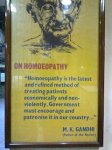
“Homeopathy is the latest and refined method of treating patients economically and nonviolently. Government must encourage and patronize it in our country. Late Dr. Hahnemann was a man of superior intellectual power and means of saving of human life having a unique medical nerve. I bow before his skill and the Herculean and humanitarian labour he did. His memory wakes us again and you are to follow him, but the opponents hate the existence of the principles and practice of homeopathy which in reality cures a larger percentage of cases than any other method of treatment and it is beyond all doubt safer and more economical and the most complete medical science.”
~Mahatama Gandhi, 30 Aug 1936
Ref: Das, 1950; All India Homeopathic Medical Conference, 1968, http://sueyounghistories.com/archives/2009/07/26/mohandas-karamchand-gandhi-1869-%E2%80%93-1948/
“Homeopathy is the most modern and the most intelligent way to economically and nonviolent sick to treat. The government must promote in our country and support.”
-Gandhi cited in Martin Schmitz (ed.), Strömungen der Homöopathie, KVC Verlag Essen, Essen 2002
Gandhi also persuaded people to study homeopathy
Related Post
Which sportspersons use Homeopathy and Why?
List of Famous People and Celebrities in support of Homeopathy
WordPress bloggers are free to reblog this post.
-
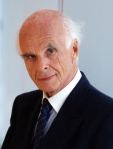
- Twice nominated for Nobel Peace Prize 2004/5
-
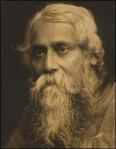
- Nobel Prize in Literature 1913
-
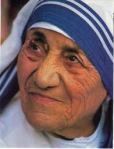
- Nobel Peace Prize 1979
-

- The Father of Immunology
-
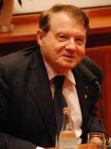
- Nobel Prize in Physiology or Medicine 2008
-
- Nominated 5 times Nobel Peace Prize between 1937-1948
-
- Nobel Laureate – Physics 1973


 Science-based Homeopathy
Plasma Engineer
So that makes it all look as though the science is plausible then? In actual fact, all the real science so far has failed to demonstrate that homeopathy is effective at all. Yes – I have seen it ‘work’ too – but then again people often get better without any treatment at all, and I recognise that personal testimony is worth next to nothing. That is why double-blind trials are carried out. It removes all the bias from the experiment and proves what is intuitively obvious – that no known mechanism explains homeopathy. You can get an idea of the quality of the science on this topic from the critique at : http://www.somethingsurprising.blogspot.co.uk/2012/06/mixing-sciences-badly.html
LikeLike